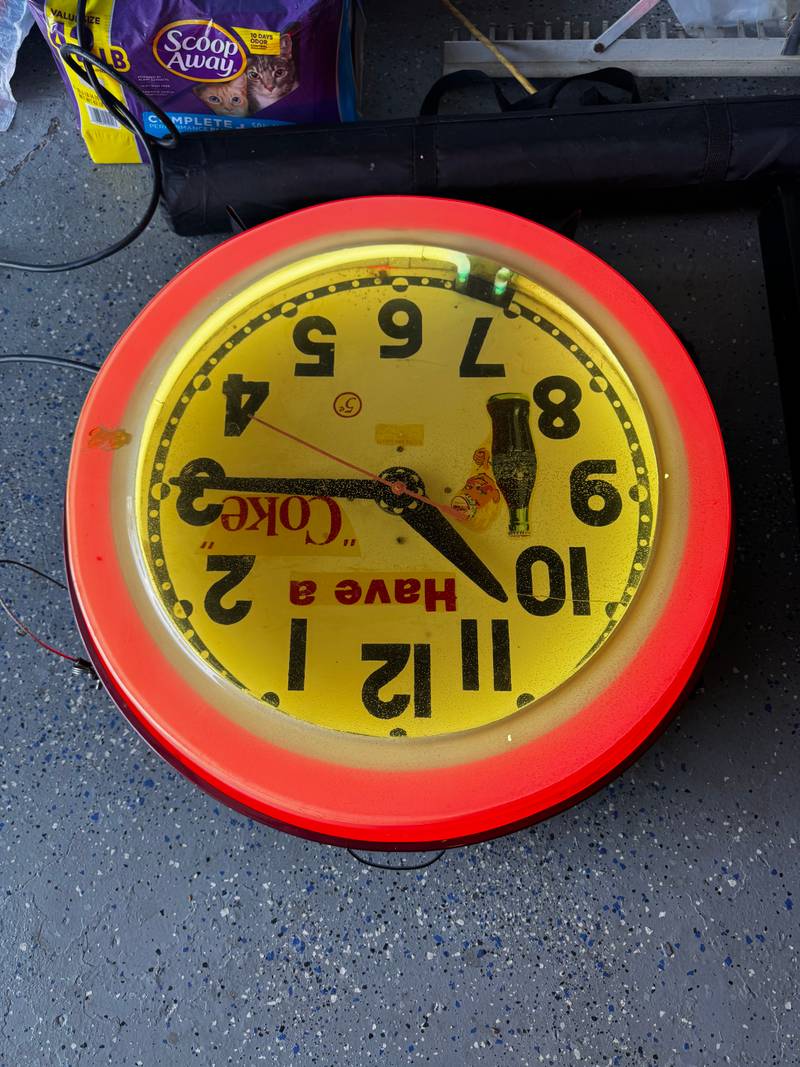
Most neon repair shops are middlemen. They take your sign, ship it somewhere else, and hand it back weeks later with a markup and no real explanation of what actually happened to it. That's not how I work. I'm Dani Bonnet, founder and lead fabricator at Neon Flamingo, and I fix neon signs in my own Echo Park studio — the same hands that bend the glass in the first place. When your sign comes in, I'm the one diagnosing it, opening it up, and putting it back together. I serve Los Angeles and Orange County, and for most straightforward repairs, pricing starts at $125–$300. If your sign has gone dark, is flickering, or is broken, here's exactly what I can do about it.
What goes wrong with neon signs
Neon signs fail in pretty predictable ways. After diagnosing hundreds of them at this point, I can usually narrow down the cause within the first few minutes of looking — but knowing what's actually happening inside the tube helps you understand what you're dealing with too.
Sections that won't light is the complaint I hear most. It's almost always one of three things: a gas leak (the tube's lost fill pressure and can't sustain an arc), a bad electrode seal (the glass-to-metal joint has failed and let air in), or the electrode itself has burned out and can't pass current anymore. Each looks slightly different once the sign's powered up, which is why I diagnose before I touch anything.
Flickering or dimming usually points to the transformer, not the glass. A failing transformer can't hold a steady output voltage, so the arc inside the tube gets unstable. Loose connections — at the electrode wire, the transformer terminal, or a splice between sections — can look identical. The distinction matters because the fix is completely different depending on which one it is.
Cracked or broken tubing looks like a death sentence but often isn't. If the break's in one section of a multi-section sign, I can usually re-bend and rejoin just that piece without touching the rest. It comes down to whether the surrounding glass and electrode work are still sound.
Uneven or inconsistent glow — bright in one spot, dim in another, or the color's just off — usually means gas pressure issues from a partial leak, or the phosphor coating inside the glass is aging out. Phosphor degrades over time, especially in signs that run continuously, and it affects both brightness and color.
Buzzing or humming is a transformer problem, and it's worth catching early. A transformer that's humming is telling you it's working harder than it should — either it's undersized for the load or it's starting to fail. Left alone, it eventually fails completely, and sometimes takes the wiring with it.
Vintage signs that have gone dark are their own category, and I get into that below.
How I diagnose and repair a neon sign
This is the part that separates an actual neon fabricator from someone who just swaps parts and hopes.
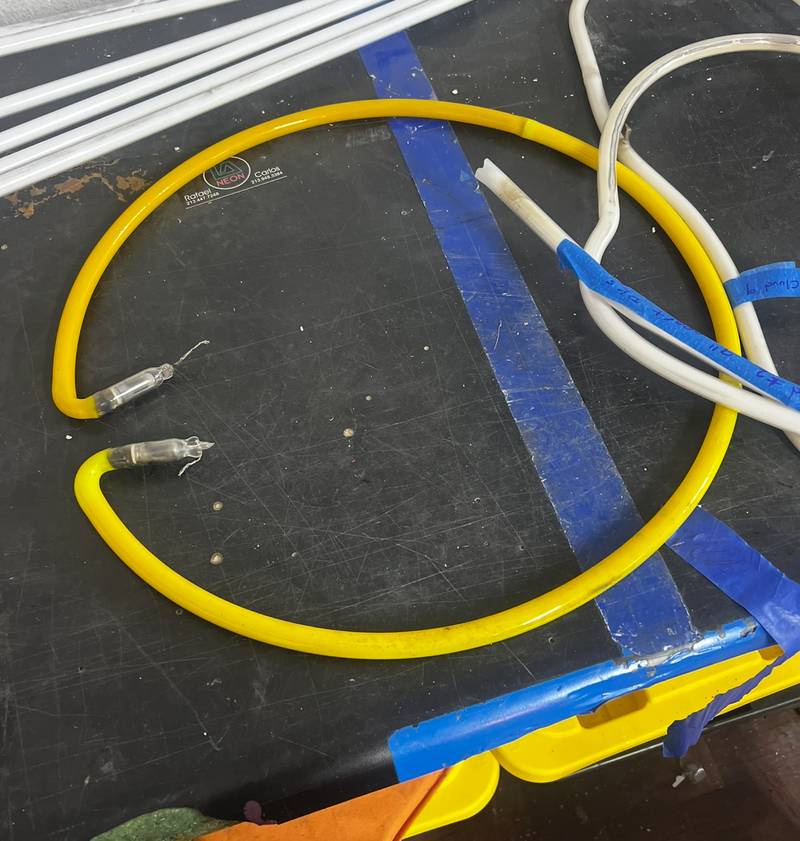
Visual inspection first. When a sign comes into the studio, I look at the electrodes before anything else. Blackening near the metal end tells me the tube's been running on contaminated gas, or the electrode's burning out. I check the glass for hairline cracks and stress fractures, and I look at the transformer — its condition, its rating, whether it's even the right spec for what it's powering.
Electrical testing next. I need to know if the problem's in the transformer or the tube before I open anything up. I test transformer output with a meter, then check continuity and resistance across the tube sections. Getting this backwards wastes real money — pulling a good transformer when the tube was the problem, or re-pumping a tube when the transformer was the actual failure. Ten minutes of testing tells me exactly where to focus.
Gas leak diagnosis is where the craft knowledge actually matters. A tube that's lost most of its gas glows dim and the wrong color, often flickering at the ends instead of holding a steady arc. A partial leak might glow fine at first and fade as the arc destabilizes. Re-pumping means fully evacuating the tube — pulling a vacuum to clear out whatever's left — then refilling with the right gas at the right pressure and re-sealing. For neon (reds, oranges), fill pressure and the electrode seal are everything. For argon (blues, greens, whites, where the color's coming from the phosphor, not the gas), the bombarding step matters just as much as the fill.
Glass repair is a case-by-case judgment call. I look at whether the break's in a rebendable spot, whether the surrounding glass and electrode work held up, and whether I can match the original color closely enough that the repair disappears into the finished sign. On a modern sign that's usually straightforward. On a vintage piece, it can be the hardest part of the whole job — more on that below.
Transformer replacement isn't just swapping a part. I spec the replacement based on total tube footage, number of colors, and the installation environment. An undersized transformer runs hot, shortens tube life, and fails early. I'd rather spend ten extra minutes getting the spec right than have someone back in six months with the same problem.
Final test and aging is the last step before anything leaves the studio. I run the repaired sign for a stretch afterward — long enough that any weak spot in the glass, the seal, or the new wiring shows up here instead of on your wall. If it's going to fail, I want it to fail in front of me.
Restoring the House of Spirits sign for the Museum of Neon Art
In 2025, the Museum of Neon Art in Glendale brought me in to help restore a section of the House of Spirits sign after the bar burned down. This one meant something to me personally — I lived a block away from House of Spirits back when it was still open, and I used to admire that sign all the time. Getting the chance to bring part of it back to life, and knowing it would live on at MONA, was one of the more meaningful jobs I've done. House of Spirits was an Echo Park sign, and Echo Park is where I live and work, so this one felt full circle in a way most jobs don't.
MONA posted about the restoration on their Instagram. If you've got a piece of local neon history that needs saving, this is the kind of work I take seriously.
Vintage and older neon sign repair
Vintage neon repair is some of the most demanding work I do, and honestly some of the most satisfying. Most shops won't touch old glass — sourcing is harder, the components are less predictable, and there's less room for error. I take it on regularly.
The challenges are real. Matching original glass colors on a sign built decades ago means working with a much narrower selection of tubing than existed at the time — some colors standard in the 1950s and '60s aren't manufactured anymore, so finding a close match takes knowing the current glass catalog well enough to make a real judgment call. Aging components — transformers, electrode wire, mounting hardware — sometimes have to come from specialty suppliers, or get fabricated from scratch. And figuring out what a sign actually needs after thirty or forty years of wear means reading the sign carefully, not running through a standard checklist.
What makes it worth doing: a vintage piece restored properly — correct glass, correct gas, a properly rated transformer — will run another 20 to 30 years. Old bar signs, roadside signs, collector pieces, family heirlooms — these are worth saving. The alternative is replacing them with something new that will never have the same character. Getting an old sign glowing again the way it was meant to is a genuinely good day in the studio.
Repair pricing and turnaround
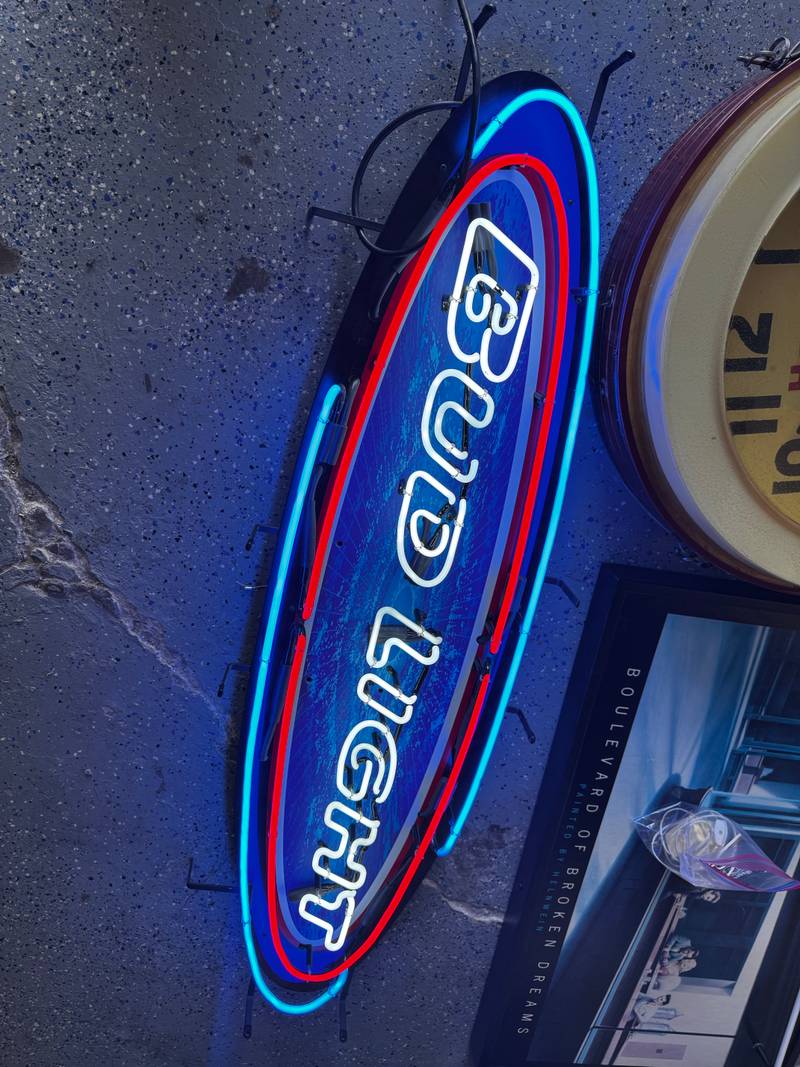
Simple repairs — a small beer sign that's stopped working, one cracked section, a straightforward transformer swap — typically run $125 to $300. More complex glass work, multi-section rebuilds, or jobs involving hard-to-source vintage glass run higher. I'll give you an honest read on what the repair actually needs before I start anything. No surprise invoices.
Turnaround for most repairs is two weeks to a month, depending on scope and what the shop schedule looks like. Vintage jobs, or anything needing a specific glass color sourced, can run longer — I'll tell you upfront if that's the case.
One practical tip: send me a photo or short video of the issue before you bring the sign in. It helps me know what I'm looking at before it arrives, which speeds up diagnosis and sometimes tells me what to have on hand.
What to expect — the repair process
1. Tell me what's wrong. A photo or video genuinely helps — even a quick phone clip of the flicker or the broken section tells me a lot before the sign's even in the shop.
2. Diagnosis. Once it arrives, I do a full inspection — visual, then electrical — and figure out if it's a glass issue, a gas issue, or an electrical one. You get an honest read on what it'll take and what it'll cost before I start. No guesswork, no upselling.
3. Repair. All the work happens in-studio. The goal isn't just "working again" — it's back to full brightness, correct color, stable operation. A sign that flickers a little less than before isn't a repaired sign.
4. Return or reinstall. Pickup and drop-off are available for most jobs. For anything large or hard to move, I can do an on-site evaluation and repair — get in touch to talk through logistics before you try to move something that shouldn't be moved.
Neon sign repair near me — serving Los Angeles and Orange County
The studio's based in Echo Park, with a second hub in Costa Mesa for Orange County clients. Pickup and drop-off are available across the service area — Hollywood, Burbank, Santa Monica, Beverly Hills, West Hollywood, Culver City, Pasadena, Glendale, and throughout Orange County.
If you're searching for a neon light repair shop near you in the greater LA area, you've found one that actually does the work in-house. For sensitive vintage pieces, I strongly prefer in-studio repair over shipping — glass neon and freight carriers don't mix, and a sign that arrives cracked is a more expensive repair than the one you started with.
Frequently asked questions
How do I know if my neon sign needs repair or replacement?
Almost always, repair is the right call for glass neon. Replacement only makes more sense if the sign's structurally destroyed — multiple sections shattered, the backing beyond saving, or the piece so far gone the repair would cost more than the sign's worth. For most failures — gas leaks, broken sections, transformer issues, flickering — repair is straightforward and a lot less expensive than starting over.
How long does neon sign repair take?
Most repairs turn around in two weeks to a month. Simple jobs — a transformer swap, a single re-pumped section — can move faster. Vintage repairs or hard-to-source glass colors can take longer. I'll give you a realistic timeline when I look at the sign, not an optimistic one.
Can you repair a vintage neon sign?
Yes — and it takes an actual fabricator, not a generic repair shop. It means sourcing matching glass from a much smaller current catalog, working with aging components, and understanding how signs were built before modern materials and techniques existed. A shop that doesn't bend glass can't really do this work. I can — I restored a piece of the House of Spirits sign for the Museum of Neon Art in 2025.
How much does neon sign repair cost in Los Angeles?
Simple repairs start at $125 to $300. More complex work — heavier glass rebuilding, vintage sourcing, multi-section repairs — gets quoted honestly before I start. Cost depends on scope, and I won't give you a number until I've actually looked at the sign.
Do you repair LED neon signs as well as glass neon?
Honest answer: LED neon flex is often cheaper to replace than repair. The strips are modular and inexpensive, and the failure modes are different from glass. Glass neon is almost always worth repairing — the material holds up, the failure points are well understood, and a properly repaired glass sign will outlast a replacement LED product. If you're not sure what you've got, send me a photo and I'll tell you.
See more of the studio's work on custom neon sign fabrication, browse recent projects, or get in touch through the contact page.
This page was written by Dani Bonnet, founder and lead fabricator at Neon Flamingo, hand-bending and repairing glass neon in Los Angeles.